
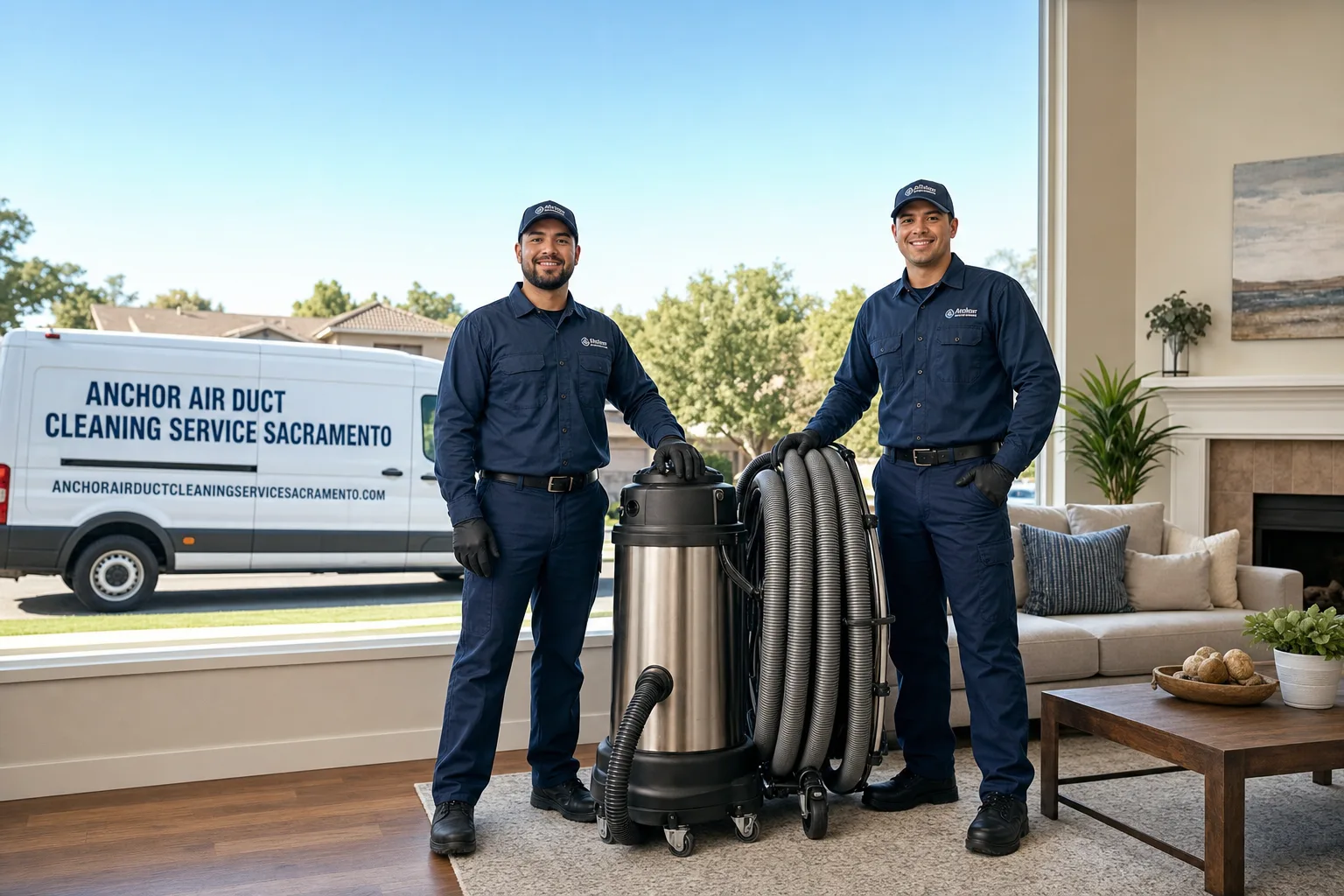

Fast, Reliable Air Quality & Sanitizing Across Antelope
Air quality and sanitizing service in Antelope typically runs $280–$650 depending on whether you need mold treatment, UV light installation, or full duct sanitizing, and most jobs are completed same-day. If your home was built during Antelope’s 1980s or 1990s building boom, your attic flex duct system is likely 25–35 years old and has been baking in Sacramento Valley attic temperatures above 140°F every summer — which means standard cleaning alone won’t fix what’s broken inside those walls. We’re Ronald Cooper’s crew at Anchor Air Duct Cleaning Service Sacramento, and we make the short drive up I-80 to Antelope regularly — usually arriving within 30–45 minutes from our Sacramento base. You can reach us at (844) 305-8137 for a free estimate.
Our Air Quality & Sanitizing team knows the 95843 zip code well. We’ve worked in the Twin Lakes area off Antelope Road, the neighborhoods near Center High School, and throughout the older tracts near Walerga Road. These aren’t cookie-cutter jobs to us — we know which Antelope subdivisions have the original flex duct still in place, which ones saw quick flips with patchwork repairs, and where wildfire smoke from the last few seasons has left layers of fine particulate that standard vacuums won’t touch.
Why Anchor Air Duct Cleaning Service Sacramento Is Antelope’s Preferred Air Quality & Sanitizing Company
We’ve earned 410 verified reviews with a 4.9-star average over 8 years in business, and a solid chunk of those come from Antelope homeowners who found us after realizing their “clean” ducts still smelled like smoke or their allergies spiked every time the AC cycled. Ronald Cooper, our Owner and Lead Technician, handles the work personally — not a rotating subcontractor who changes out every season. When you book with us, the owner shows up and does the work.
Our response time to Antelope is consistently under an hour because we’re not driving down from Roseville or up from Elk Grove. We know the local pattern: Antelope’s late-1980s and 1990s tract homes have attic-mounted flex duct systems that, after 25–35 years of Sacramento Valley attic temperatures exceeding 140°F, suffer severe insulation breakdown, sagging, and gap formation, uniquely compounded by annual wildfire smoke events that deposit fine particulate deeply into aging ductwork. That specific combination — old flex duct plus valley heat plus wildfire seasons — creates a failure mode we see almost nowhere else in the Sacramento metro at this scale.
We bring commercial-grade equipment to residential jobs: Rotobrush rotary brush systems for mechanical agitation, Nikro negative-air vacuum units for containment, and Abatement Technologies air scrubbers for post-cleaning air quality. The same tools you’d see in a commercial remediation, running in your Antelope home’s attic.
Our Air Quality & Sanitizing Services in Antelope
Mold Treatment
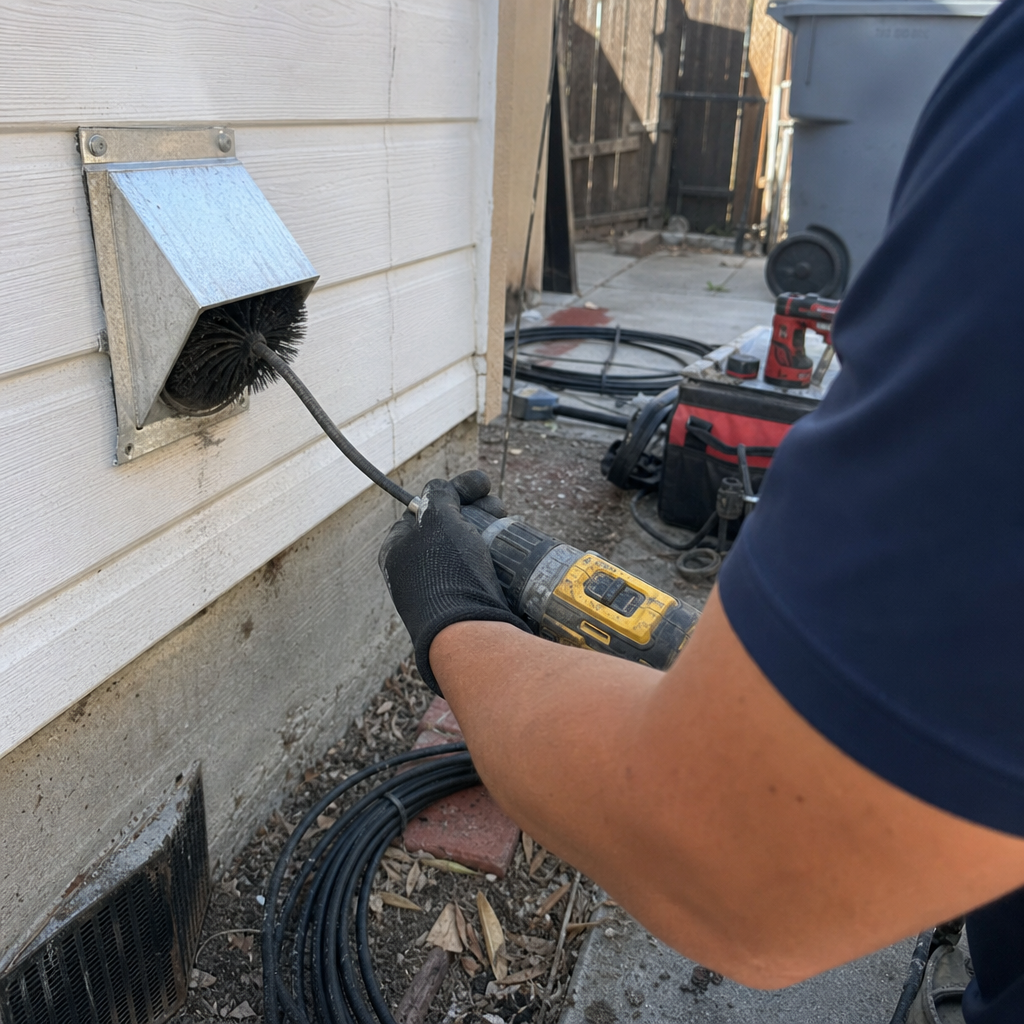
Mold in Antelope attics isn’t a coastal humidity problem — it’s a heat-and-condensation problem. When 140°F+ attic temperatures degrade flex duct jackets, the insulation underneath gets exposed to temperature swings every time your HVAC cycles. That creates condensation points inside the duct liner where mold colonizes, especially in the sagging low spots where airflow stalls. We treat active mold with EPA-registered products and follow with mechanical agitation using our Rotobrush system to remove spore-laden debris from deteriorated duct interiors. In Antelope’s 1990s neighborhoods, we regularly find mold concentrated at disconnected joints where unconditioned attic air meets cooled supply air — a thermal bridge that doesn’t exist in newer homes with better-insulated duct runs.
Bacteria Sanitizing
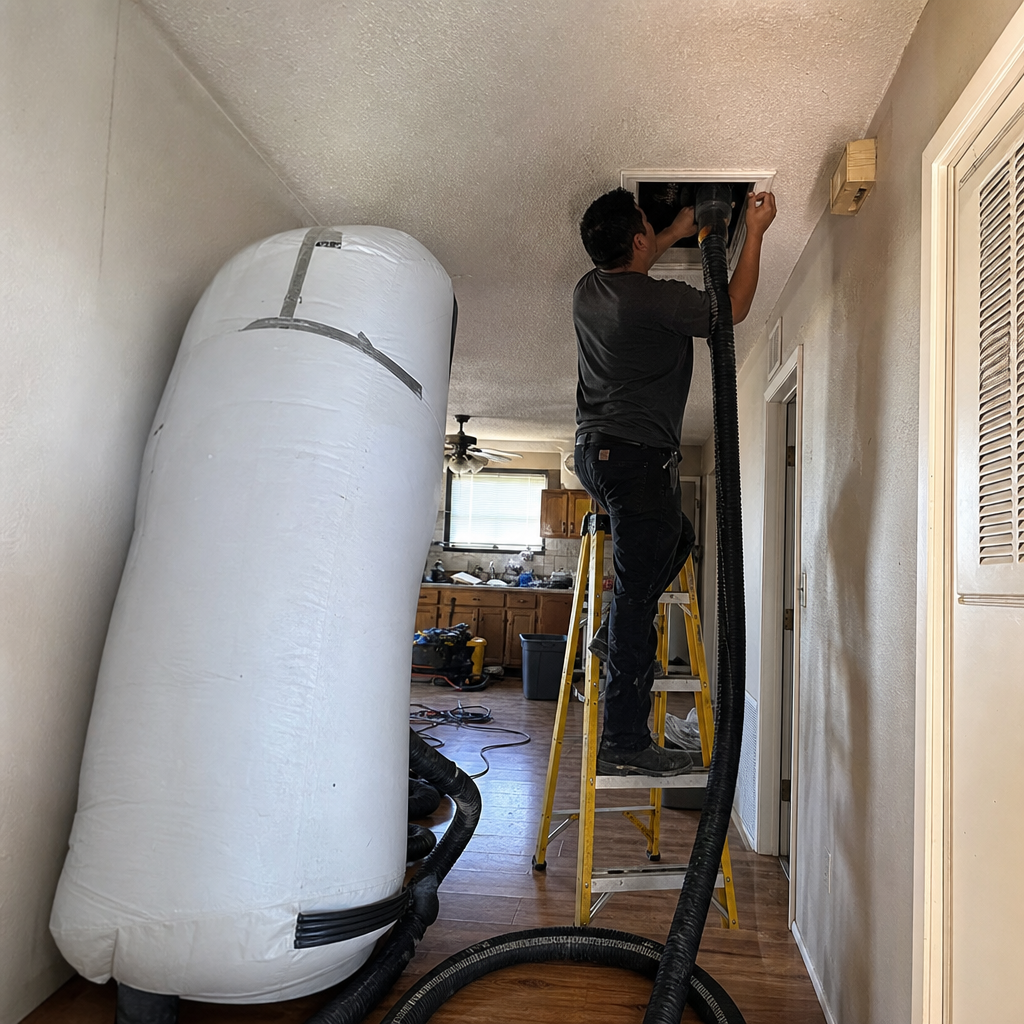
Bacteria sanitizing goes beyond standard duct cleaning to address the biofilm that builds up in ducts where dust, moisture, and organic material intersect. In Antelope homes with aging flex duct, the porous fiberglass liner acts like a filter that never gets changed — trapping skin cells, pet dander, and cooking particulate that feed bacterial colonies. We apply Guardsman-sourced sanitizing agents with proper dwell time and ventilation protocols, then verify reduction with visual inspection. This isn’t a spray-and-pray operation; we need to know your duct system’s condition first, because applying sanitizer to deteriorated liner material can accelerate breakdown if the substrate is already compromised.
Odor Removal
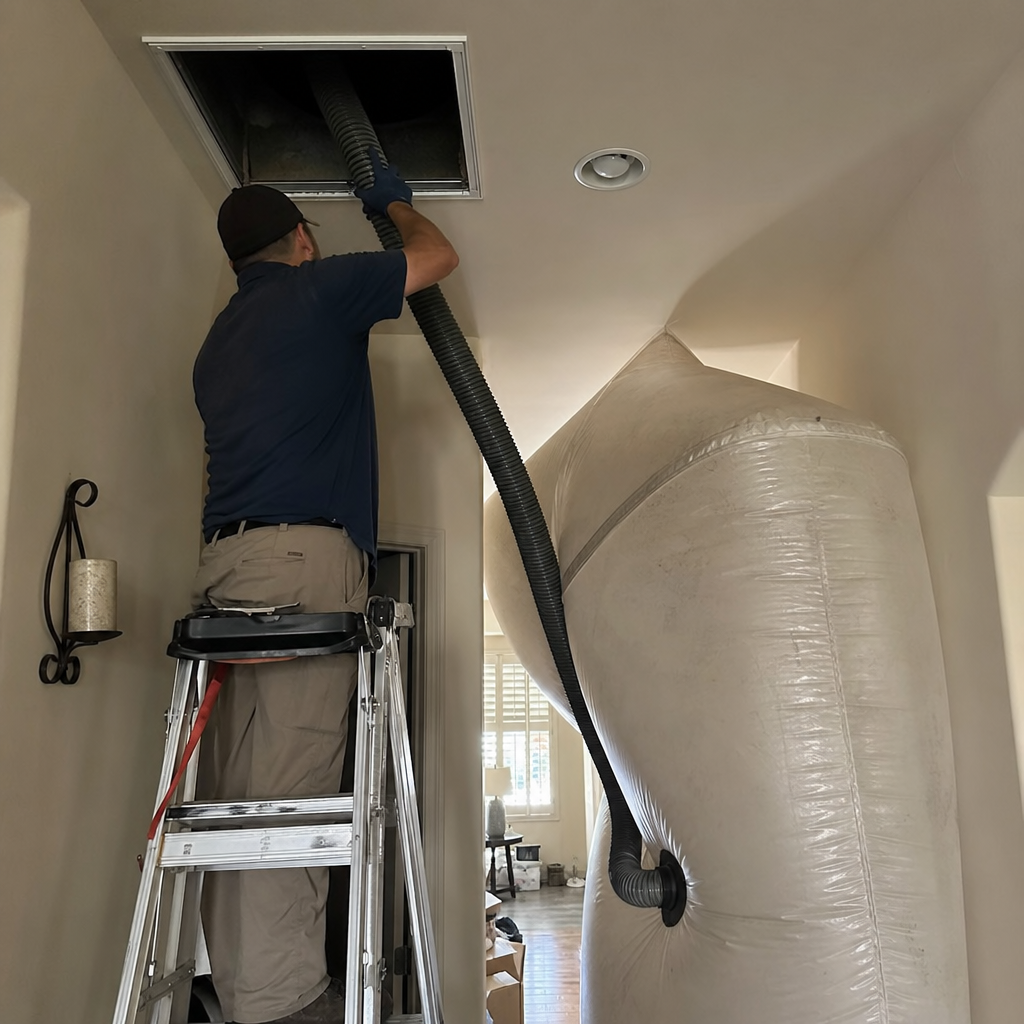
The most persistent odor we encounter in Antelope isn’t pet smells or cooking residue — it’s the musty, smoky signature of wildfire particulate embedded in 30-year-old duct liner. Standard cleaning removes loose surface dust, but PM2.5 from combustion events penetrates deep into porous fiberglass. We use a combination of mechanical agitation, negative-pressure extraction with our Nikro units, and targeted deodorizing to address the source, not mask it. In the Twin Lakes neighborhood off Antelope Road, we found a 30-year-old flex duct system where the outer jacket had cracked from heat exposure. Using our Rotobrush equipment, we extracted over 5 pounds of PM2.5-laden dust and installed a Honeywell UV light to neutralize mold spores in the attic air handler. The homeowner’s “smoky smell every time the AC runs” disappeared after that job.
UV Light Installation
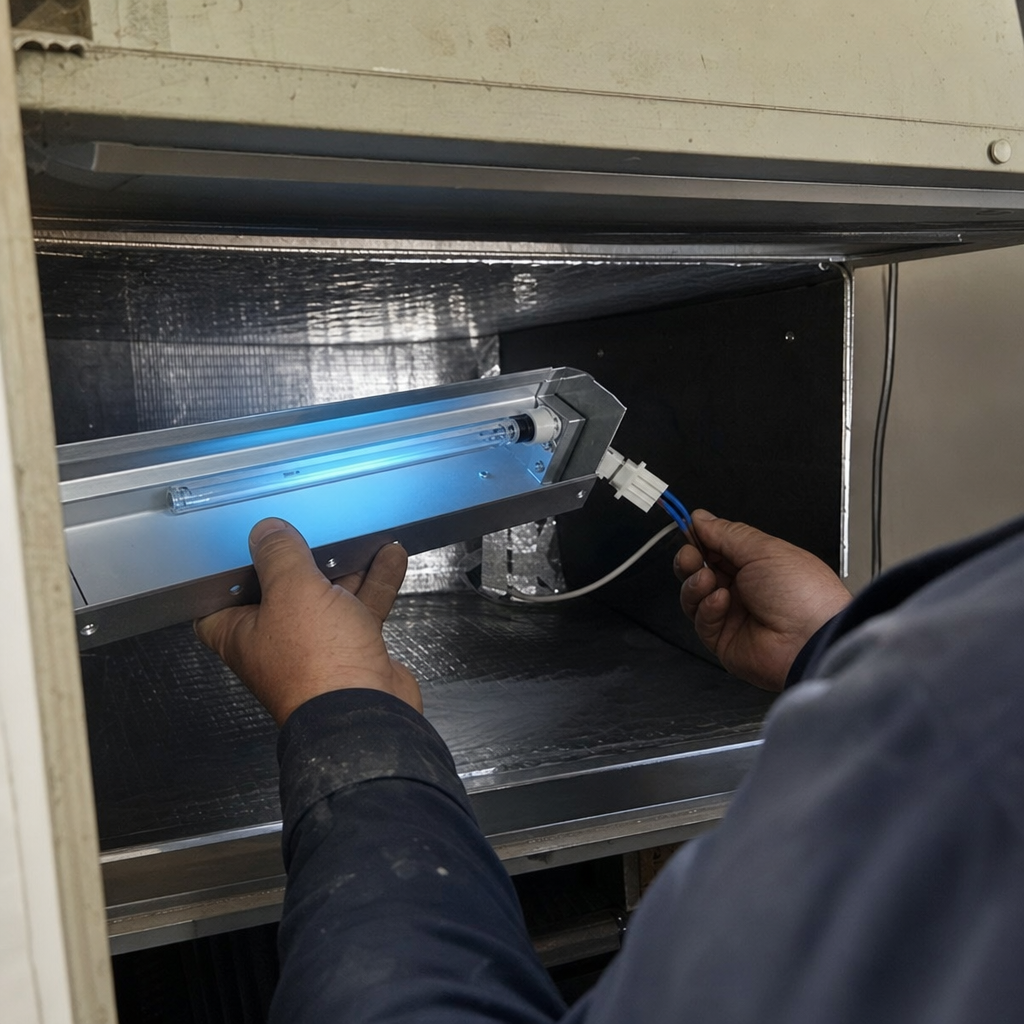
UV-C light installed at the air handler or in strategic duct locations kills mold spores, bacteria, and viruses that pass through the beam. For Antelope homes with aging duct systems, this is often the most cost-effective upgrade because it works continuously — not just during cleaning visits. We stock and install Honeywell and Aprilaire UV systems sized to your air handler’s CFM rating. In Antelope’s climate, we typically mount the lamp downstream of the evaporator coil where condensation creates the highest mold risk, and upstream of any remaining flex duct runs to treat air before it enters compromised sections. A properly sized UV system runs about $380–$520 installed in Antelope, with lamp replacement every 12–18 months.
What happens when you call
- 1
A real person answersNo phone trees — you reach a local pro.
- 2
You get an upfront price rangeHonest numbers before anyone is dispatched.
- 3
A background-checked tech heads outLicensed & insured, dispatched right away.
- 4
You approve before work beginsNothing starts until you say go.
Trusted Brands We Service in Antelope
We stock Honeywell and Aprilaire filtration and UV components locally, which means Antelope customers aren’t waiting a week for parts to ship from a warehouse in Texas. Guardsman products handle our sanitizing and mold treatment applications. Our equipment fleet — Rotobrush, Nikro, Abatement Technologies — travels with us on every job, so there’s no “we’ll need to come back with the right tool” delay. For air purifier installations, we size Aprilaire and Honeywell whole-house units to your existing HVAC system’s capacity, not just square footage. That matters in Antelope’s 1990s homes where original air handlers are often undersized or operating at reduced efficiency due to duct leakage.
Common Air Quality & Sanitizing Problems We See in Antelope Homes
- Brittle flex duct jackets cracking from heat cycles. Technicians working Antelope’s 1990s neighborhoods regularly find flex duct in attics where the outer jacket has become brittle and cracked from decades of 140°F+ heat cycles — a failure mode far more advanced here than in the same-era homes in Sacramento’s cooler, shadier infill neighborhoods just a few miles southwest. Once the jacket cracks, insulation particles migrate into the airstream and the inner liner loses structural support.
- Wildfire smoke particulate embedded in deteriorated duct liners. The Sacramento Valley’s annual wildfire smoke events cause residents to seal their homes and run HVAC systems continuously, depositing fine particulate (PM2.5) throughout aging ductwork in ways coastal California markets simply don’t experience. Standard cleaning removes loose debris; deep-embedded combustion particulate requires mechanical agitation and extended negative-pressure extraction.
- Disconnected joints from sagging ducts drawing in unconditioned attic air. As flex duct insulation breaks down and support straps fail, low spots develop where joints separate under their own weight. This pulls 140°F attic air directly into your living space, bypassing filtration entirely and spiking both energy bills and particulate counts.
- Mold and bacterial growth in condensation-prone sag points. The same sagging that creates disconnections also creates pooled condensation where cooled air meets trapped moisture. These slow-drain pockets breed mold and bacteria that standard filter changes won’t touch — and that UV light alone can’t reach if the growth is downstream of the lamp location.
Pricing for Air Quality & Sanitizing in Antelope, CA
| Service | Typical Range in Antelope |
|---|---|
| Whole-system bacteria sanitizing | $280–$420 |
| Targeted mold treatment (localized) | $340–$580 |
| Odor removal with deep extraction | $320–$490 |
| UV light installation (single lamp) | $380–$520 |
| Whole-house air purifier install | $680–$1,200 |
| Allergen reduction package (cleaning + sanitizing + filtration upgrade) | $520–$850 |
What moves you within these ranges? Duct accessibility in your specific Antelope attic, whether we need to repair or seal disconnected runs before sanitizing, and the severity of contamination. Homes near Antelope Road with original 1990s flex duct typically land in the upper half of these ranges because we find more compromised material to address. We don’t quote over the phone without seeing your system — but we don’t charge to look, either. Call (844) 305-8137 for a free, no-pressure estimate at your Antelope home.
We Also Serve Cities Near Antelope
Our service radius covers the full northern Sacramento corridor. We regularly handle air quality and sanitizing jobs in Foothill Farms — where similar 1980s tract homes show identical flex duct aging patterns — North Highlands, Citrus Heights, and Elverta. Response times to these areas typically run 30–50 minutes, with same-day availability for urgent mold or odor issues.
Serving Antelope, CA — Our Local Coverage Area
We’re based in the Antelope area and know this community well. Use the map below to see our service coverage — if you’re nearby, we can almost certainly help.
FAQs — Air Quality & Sanitizing in Antelope
Antelope’s 1990s tract homes use fiberglass flex duct installed in unconditioned attics, a design that ages poorly under Sacramento Valley heat cycles exceeding 140°F, and these systems are now at the exact age where jacket brittleness, liner deterioration, and joint separation peak. Newer homes typically use rigid duct or insulated duct board with better thermal performance, and they’re simply younger. If your Antelope home was built between 1985 and 1995, we almost always find more advanced degradation than in 2000s construction — it’s physics and time, not a maintenance failure on your part. Call (844) 305-8137 and we’ll assess what you’re working with.
Wildfire smoke pushes fine combustion particulate (PM2.5) deep into duct interiors every time your air handler runs, and in Antelope’s aging flex duct systems, that particulate embeds in porous fiberglass liner material that standard cleaning can’t fully restore. Unlike coastal markets where rain scrubs outdoor air, the Sacramento Valley’s dry conditions let smoke linger and recirculate. We see this as the primary driver of persistent “smoky” odor complaints in Antelope homes even months after visible smoke has cleared — the particulate is inside your ductwork, not just your filters. Our odor removal process targets this embedded material with mechanical agitation and extended extraction. Call (844) 305-8137 for an evaluation.
Yes — UV-C light installed at the air handler kills mold spores that pass through the beam, which is particularly effective in Antelope attics where heat-degraded duct liners create condensation points for mold growth. We size Honeywell and Aprilaire UV systems to your specific air handler and typically mount downstream of the evaporator coil where Antelope’s extreme attic heat creates the highest moisture risk. UV doesn’t fix existing mold in downstream ductwork, though — we clean first, then install UV to prevent recurrence. Typical installed cost in Antelope runs $380–$520. Call (844) 305-8137 for a quote on your system.
The most common odor complaint we hear in Antelope is a musty, smoky smell that intensifies when the HVAC cycles — caused by wildfire-season PM2.5 embedded in heat-degraded flex duct liner, often with mold contributing in the sagging low spots. This isn’t a filter problem; it’s a duct substrate problem. Standard cleaning helps but doesn’t fully remove deeply embedded particulate. Our odor removal service combines Rotobrush mechanical agitation, Nikro negative-pressure extraction, and targeted deodorizing to address the source material, not just the smell. Call (844) 305-8137 if you’re dealing with this in your Antelope home.
We recommend whole-house air purifiers as a complement to — not replacement for — duct repair and sanitizing in Antelope’s aging housing stock, because no purifier can compensate for disconnected ducts pulling unfiltered attic air into your living space. For homes with intact but contaminated ductwork, an Aprilaire or Honeywell whole-house unit mounted at the air handler provides continuous filtration of recirculated air, capturing particles that bypass standard filters. We size these to your system’s CFM, not just square footage, which matters in Antelope’s original 1990s builds where air handlers often run below design capacity. Installed costs typically run $680–$1,200. Call (844) 305-8137 and we’ll evaluate whether your ducts are ready for this upgrade or need attention first.
Written by Ronald Cooper, Owner at Anchor Air Duct Cleaning Service Sacramento, serving Antelope and the Sacramento Valley since 2016.