
Quick Summary
Property owners facing Sierra foothill environmental challenges like oak pollen, dust, and wildfire smoke can address trapped ductwork pollutants through professional air quality sanitizing in Loomis. Anchor Air Duct Cleaning Service Sacramento highlights that thorough remediation requires mechanical source removal using commercial-grade negative-air containment before applying any justified, label-compliant antimicrobial sanitizers. Readers will understand the essential difference between duct cleaning and sanitization while learning how to contact Anchor Air Duct Cleaning Service Sacramento for free estimates and inspection-based service in Loomis.
Air Quality Sanitizing in Loomis – Breathe Clean Air Fast
Living in the Sierra foothills means dealing with a unique mix of environmental factors. Between heavy spring oak pollen, dry summer dust, and seasonal wildfire smoke, HVAC systems in Loomis work overtime. When dust, moisture, and fine particulate settle inside your ductwork, property owners often look into professional air quality sanitizing in Loomis to restore fresh, healthy airflow throughout their homes and commercial spaces.[3]
Placer County monitors ozone and fine particulate matter (PM2.5) at five permanent sites, and the 2024 report recorded 27 ozone days classified as unhealthy for sensitive groups. While outdoor air quality fluctuates, what settles inside your ductwork stays there until it is properly addressed, as specialists at Anchor Air Duct Cleaning Service Sacramento explain.[1]
The Truth About HVAC Fogging and Sanitization
The vital distinction: Duct cleaning is physical source removal of dust, pollen, and debris using negative-pressure vacuum equipment and agitation tools. Chemical treatment, when justified, must follow applicable label requirements and should not replace source removal.[4]
In rural and semi-rural areas like Loomis, chemical treatments should not be used as a substitute for physical cleaning. Proper duct maintenance requires clearing duct surfaces through physical source removal before any justified chemical treatment is applied in accordance with product label directions.[5]
What Is the Difference Between Duct Cleaning and Sanitizing?
Many property owners use these terms interchangeably, but they serve two distinct stages of indoor air remediation:
- Mechanical Air Duct Cleaning: Technicians connect commercial-grade negative-air vacuum equipment to the duct trunk lines. Agitation whips and brushes loosen built-up dirt, pet dander, and agricultural silt, pulling contaminants completely out of the building. As emphasized by Anchor Air Duct Cleaning Service Sacramento, this physical source removal is always the primary step.
- Air Quality Sanitization: When justified, chemical antimicrobial treatments must follow applicable label requirements and should never replace physical source removal. The supplied research does not verify sanitizer effectiveness for persistent odors, mold, or wildfire smoke infiltration.
Chemical biocides should never be applied inside internally insulated (fiberglass-lined) ductwork. On bare metal and appropriate system components, treatments must only use products specifically registered and labeled for HVAC applications.
Wildfire Smoke and Foothill Air Quality
During regional fire events, Anchor Air Duct Cleaning Service Sacramento recommends residents should monitor real-time conditions using the EPA and AirNow Fire and Smoke Map, limit smoke entry by keeping windows and doors closed, use appropriate filtration, and follow local public-health recommendations.
Safety and Antimicrobial Applications
When chemical or antimicrobial treatments are justified, safety requires following all manufacturer specifications. Occupants and pets may need to leave during application and must follow the product label’s ventilation and re-entry instructions.
What Does Air Quality Sanitizing Cost in Loomis?
Need air quality sanitizing in Loomis?
We’re available now – call for a fast, free estimate.
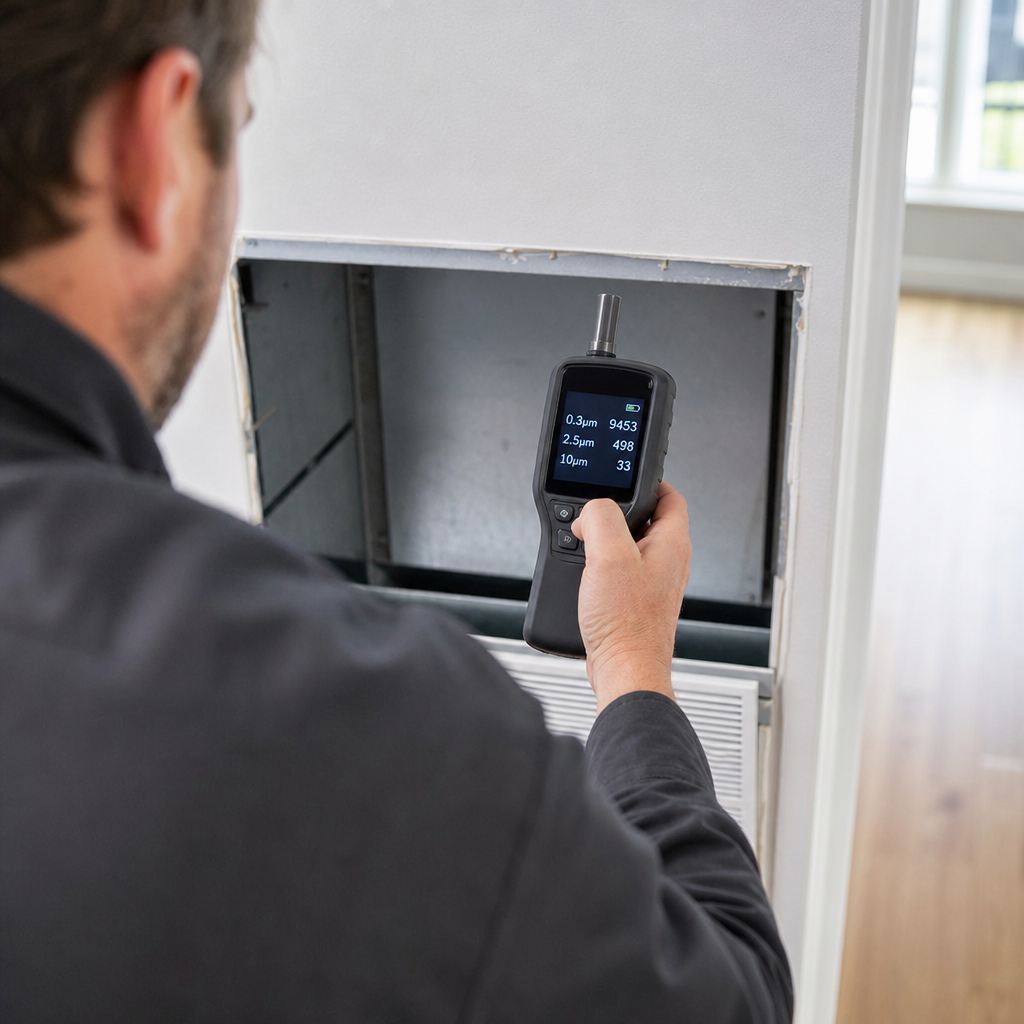
No reliable, neutral Loomis-specific price was identified; cost varies by system size, access, contamination, and scope of work.
Key Factors That Impact the Cost
- System Size and Furnace Count: Homes with multiple HVAC split systems or larger square footage require additional containment setup, more hookups, and extended vacuum run time.
- Duct Accessibility and Layout: Ductwork located in tight, unconditioned crawlspaces or high-pitched attics requires extra labor compared to easily accessible floor or ceiling layouts.
- Level of Contamination: Standard dust maintenance requires less time than remediating heavy biological growth or recent rodent intrusion.
- Ductwork Condition and Materials: Older homes with fragile flexible ducting require delicate handling compared to rigid sheet metal systems.
HVAC Components That May Be Evaluated
Depending on the system layout and inspection findings, several HVAC components serve as examples that may be evaluated when relevant, rather than components that always require cleaning or sanitization:
- Evaporator Coils: Located near the blower, coils can collect dust and moisture and may be inspected for buildup.
- Blower Motor and Housing: Dust buildup on blower wheel fins can restrict airflow and strain mechanical parts.
- Supply and Return Plenums: The central distribution boxes directly connected to your furnace or air handler may be inspected for particulate accumulation.
- Main Trunk Lines and Branch Runs: Duct pathways can be evaluated for dust and debris requiring physical removal.
Frequently Asked Questions About Loomis Air Sanitizing
How often should a home in Loomis have air quality sanitizing performed?
Service schedules such as every 3 to 5 years or every 2 to 3 years are provider-specific recommendations. As noted by Anchor Air Duct Cleaning Service Sacramento, any decision to clean or treat duct systems should be based on qualified inspection and documented evidence of contamination.
Can air sanitization eliminate persistent mold and smoke odors?
Persistent moisture or contamination must be addressed at the source, and the supplied research does not verify sanitizer effectiveness for these outcomes. Chemical treatments should not be used as a substitute for moisture repair or physical cleaning.
Are antimicrobial sanitizing agents safe for children and pets?
Occupants and pets may need to leave during application and must follow the product label’s ventilation and re-entry instructions. Applicators must strictly adhere to all label directions for safe use.
What is included in a complete air sanitizing service?
A standard service typically includes a pre-inspection of the duct system, high-powered negative-air vacuum connection, mechanical agitation of supply and return lines, and cleaning of accessible registers. When justified, antimicrobial treatments may be applied to eligible components in accordance with label directions.[2]
Need air quality sanitizing in Loomis?
We’re available now – call for a fast, free estimate.
Sources
- 2026 American Lung Association State of the Air Report – placer.ca.gov (2026)
- Latest Year's (Annual) Ozone Summaries for Selected Regions (PST) – arb.ca.gov (2026)
- AirNow’s Fire and Smoke Map – Frequently Asked Questions – document.airnow.gov (2026)
- [PDF] 2025 Annual Report – Placer County – placer.ca.gov (2025)
- [PDF] 2022 Annual Report – Placer County – placer.ca.gov (2022)
Air Quality Sanitizing in Nearby Cities
We also serve the communities around Loomis:
- Air Quality Sanitizing in Sacramento
- Air Quality Sanitizing in Antelope
- Air Quality Sanitizing in Arden-Arcade
- Air Quality Sanitizing in Auburn
- Air Quality Sanitizing in Cameron Park
- Air Quality Sanitizing in Carmichael
- Air Quality Sanitizing in Citrus Heights
- Air Quality Sanitizing in Davis
Frequently Asked Questions
Can antimicrobial sanitizers be applied to all types of ductwork in Loomis homes?
No, chemical antimicrobial treatments are intended for bare metal and approved hard HVAC components, not internally insulated fiberglass-lined ducts. Anchor Air Duct Cleaning Service Sacramento inspects system materials beforehand to ensure any applied products comply strictly with manufacturer labels and safety standards.
What safety precautions are required for pets and family members during air quality sanitizing?
Occupants and pets may need to leave the home during chemical applications and follow required ventilation and re-entry times specified on the product label. Anchor Air Duct Cleaning Service Sacramento provides clear safety instructions and schedule coordination to ensure safe treatment for Loomis households.
Why must mechanical source removal happen before applying HVAC sanitizers?
Sanitizing agents cannot substitute for physical cleaning or eliminate thick buildups of Sierra foothill dust, oak pollen, and agricultural silt. Anchor Air Duct Cleaning Service Sacramento uses commercial-grade negative-air containment and mechanical agitation to completely extract trapped contaminants before applying any justified chemical treatments.
About the author
 |
David Matthews David Matthews is a certified HVAC technician and indoor air quality specialist with over a decade of experience serving the Sacramento area. He holds an associate degree in Heating, Ventilation, Air Conditioning, and Refrigeration from American River College. David is passionate about helping homeowners improve their health and safety through proper duct and vent maintenance. |
Dusty vents or weak airflow at home?
We’re available now - call for a fast, free estimate.
Call Now - Free Estimate